Nothing stops
Spanish links word to word without pausing. The tidy gaps you see on the page simply are not in the sound.
Native audio, sentence by sentence. You listen, you type what you hear, and the difference between the two becomes your next lesson.
No card required · Learn in English, practise in Spanish
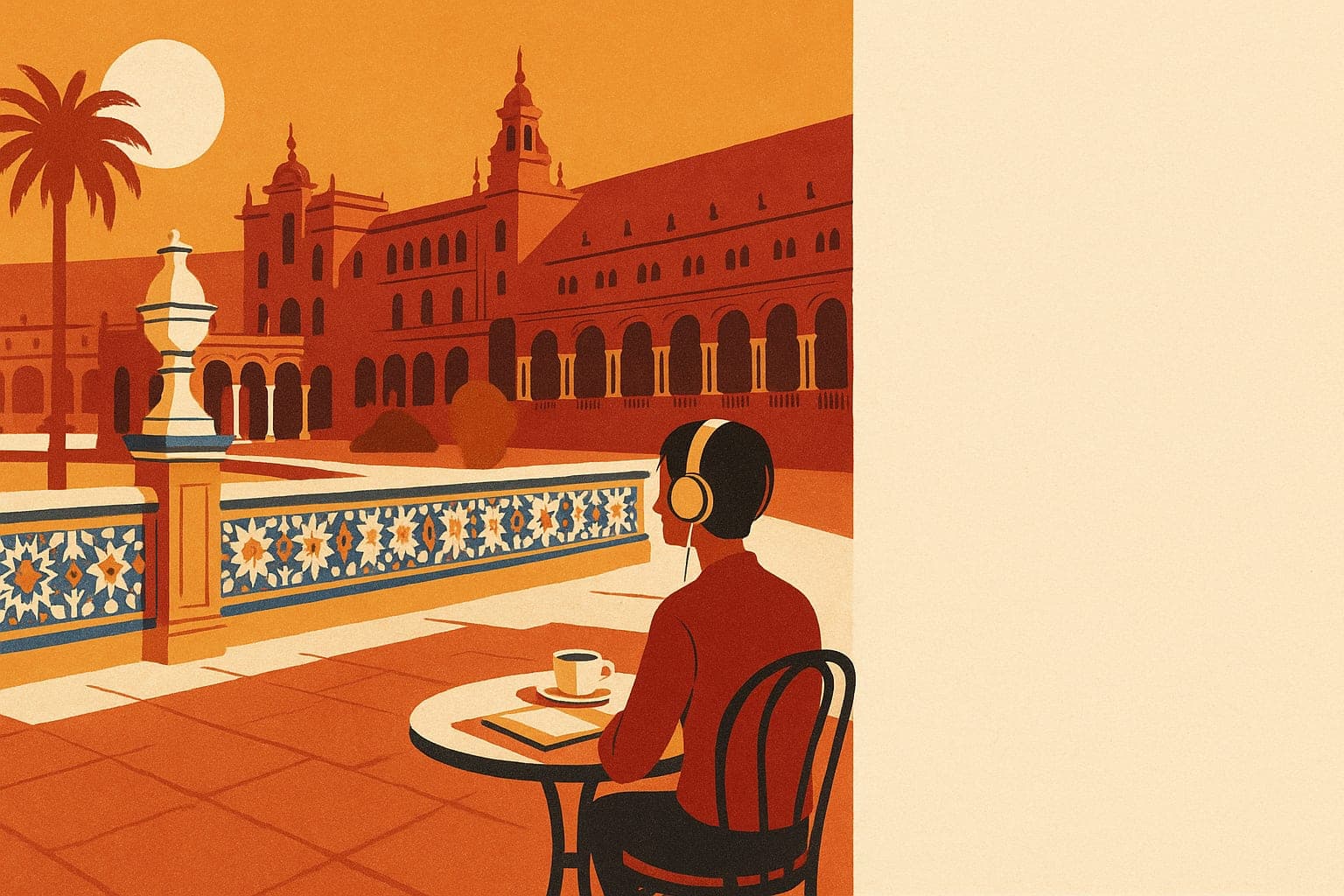
« Los amigos están en la plaza. »
One sentence · replayed until it lands
Across WELE, all languages · this month
500+
listening hours
3,000+
listening sessions
1,000+
active learners
5,000+
submissions
The listening gap
It is rarely a vocabulary problem. Written Spanish is transparent and orderly; spoken Spanish is a continuous stream, and your ear has not yet been taught where to cut it.
Spanish links word to word without pausing. The tidy gaps you see on the page simply are not in the sound.
Two vowels meeting across a word boundary fuse into one. Whole syllables vanish, and your ear counts words that never arrived.
You can follow a Spanish article comfortably and still lose a conversation in seconds. They are different skills, trained differently.
Inside a lesson
Two moves, repeated. Everything else on the page gets out of the way so your attention stays on the sound.
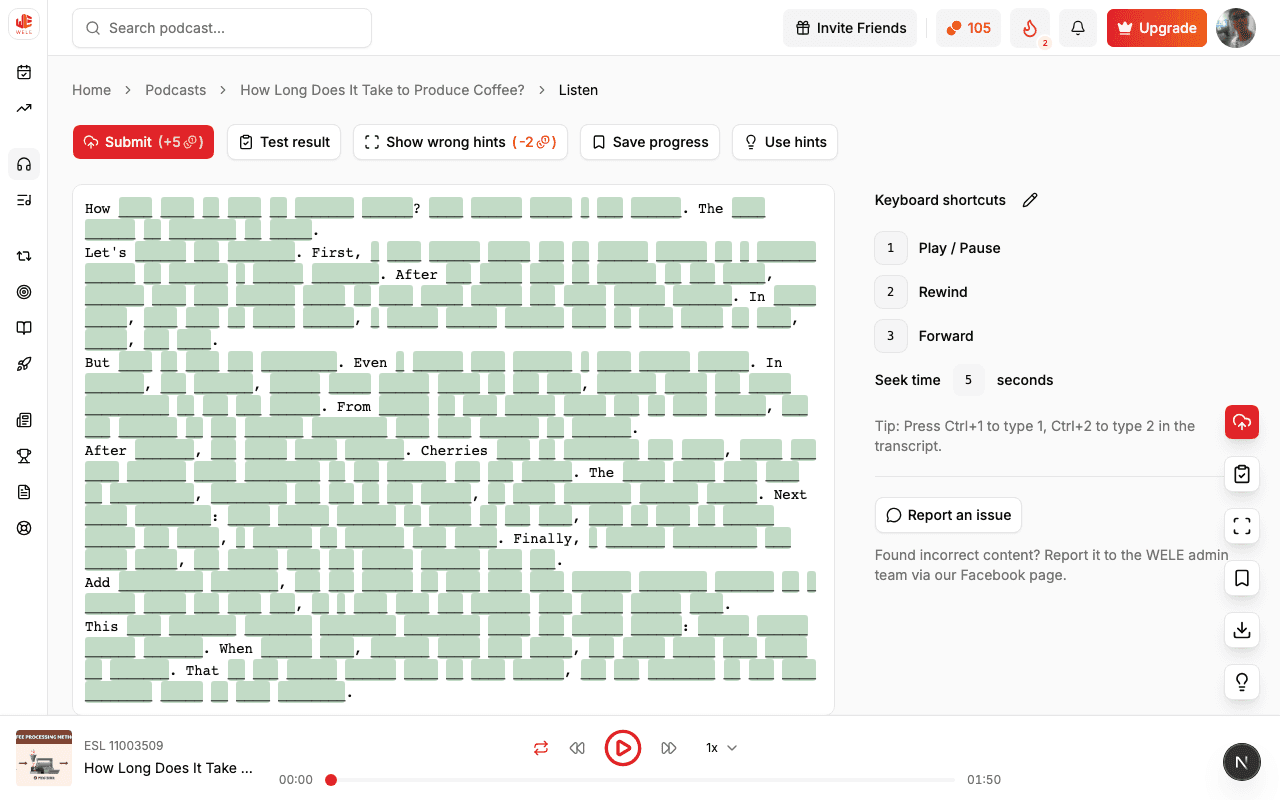
Replay a short passage as many times as you need, slow it down, and type straight into the line. No lesson map, no interruptions — only the sentence in front of you.
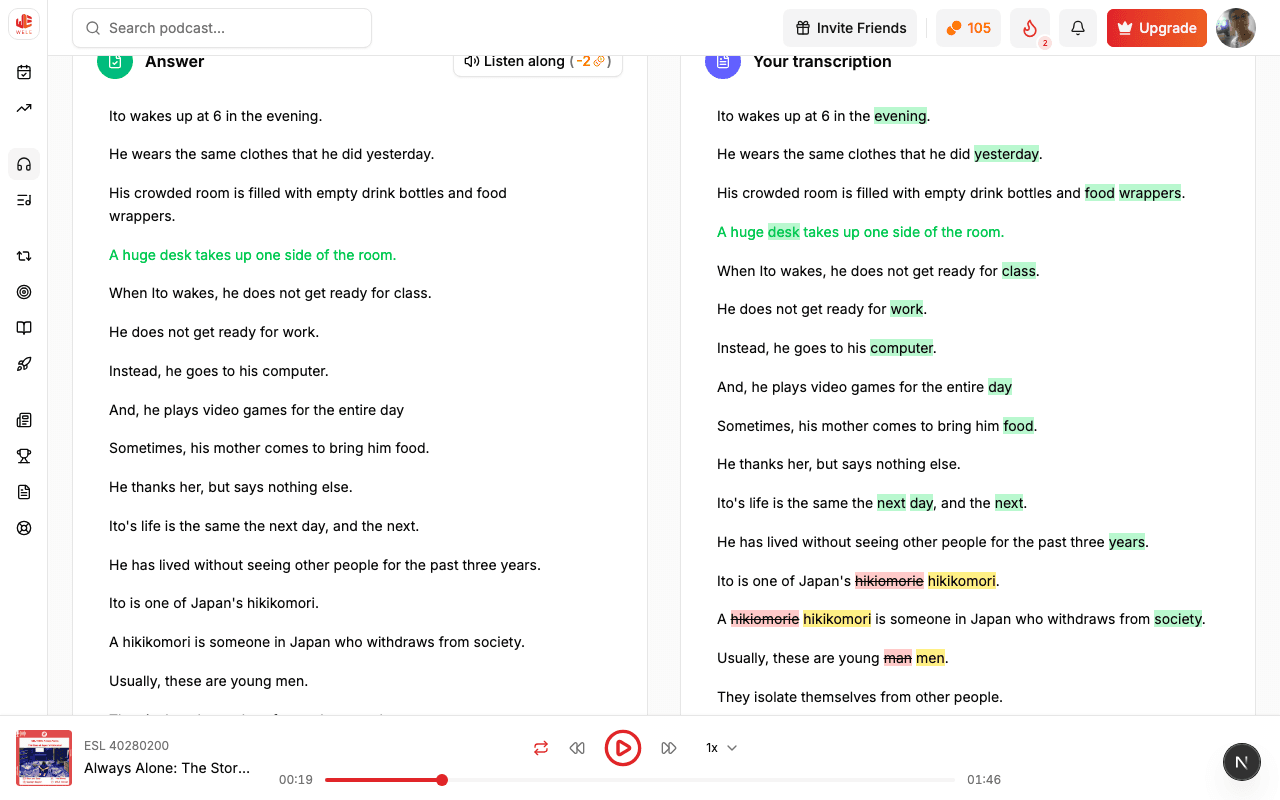
Reveal the transcript and see exactly what you missed: a swallowed syllable, a word boundary in the wrong place, an ending you never heard. Then listen once more, knowing what to expect.
The WELE method
Dictation turns passive listening into deliberate practice: you commit to a guess, you get precise feedback, and you listen again with new information.
Take in the whole thought first, before you start hunting for individual words.
Transcribe the line exactly as your ear received it — mistakes included.
Reveal the transcript and look hard at every meaningful difference.
Difficult words come back to you later, timed to the moment you would forget them.
Anatomy of sound
A transcript lets you stop the stream and look at it. You can see where two words fused, where a syllable disappeared, and where the boundary really fell — then replay that exact phrase until it stops surprising you.
Three ordinary phrases, written the way the page prints them and again the way the ear actually receives them.
On the page
para el
In your ear
pal
synalephaOn the page
está
In your ear
'tá
aphesisOn the page
los amigos
In your ear
lo-samigos
resyllabificationNone of this is sloppy speech — it is simply how the language is spoken by everyone, every day. Once you have written these patterns out a few times, you stop hearing noise and start hearing words.
The listening shelf
Practise on subjects you already care about. Start where the speech is clear, then move toward audio recorded for native ears — no translation, no simplification.
News & current affairs
Tight structure and current vocabulary — the fastest way to hear a new word twice in a week.
For your first weeks
Deliberately clear speech with full transcripts, so early sessions build confidence instead of despair.
Interviews & ideas
Two people talking naturally: overlapping turns, fillers, and the rhythm textbooks never record.
Narrative audio
Reported stories from across the Americas — a wide range of accents inside one narrative voice.
Documentary
Subject audio worth listening to twice, where the content carries you past the difficulty.
Voices & vox pop
Short, unscripted answers from real speakers — the register you actually meet on a trip.
Built for deliberate practice
No noisy lesson map, no endless rewards loop. Tools to practise, to notice, and to come back tomorrow.
A note from WELE
A language becomes yours on the day a voice stops sounding foreign.
WELE is for learners who want contact with the language, not a completion certificate. We build listening practice around real voices and feedback you can act on. The Spanish experience has its own atmosphere, but the principle never changes: practise actively, understand your mistakes, and make progress you can hear.
Simple pricing
The core experience stays free. Premium adds depth without turning your learning into a subscription puzzle.
Learner notes
Erin
Intermediate learner · Chicago
Daniel
Returning learner · Manchester
Priya
Spanish learner · Singapore
Before you begin
Still wondering whether dictation fits your level or your routine? Start here.
Begin with one short passage. The next time that sound goes past, it may not go past you.
Start learning free